Revisiting Coming Full Circle

Recently, I was searching on Google, and came across a post from Barbara Harris Leonhard that I had not visited before. It was posted August 30, 2020! I was a bit flustered that I hadn’t seen it when it was initially published, so I could give Barbara the proper thank-you for her post, not only for referencing my work but also for the valuable information she offered about generational trauma. I will leave the repost here, along with the link to Barbara’s podcast.

Memoirs of Susi Bocks

My tender years were filled with daily harshness and critical evaluation. No wonder I grew up feeling less than someone. My mother was very demeaning and cruel to me, making my alcoholic, absentee father resemble a saint. My life, like all others, had its own set of hurdles to overcome. I’ll be the first to admit – it was a daunting task.

In November 2012, she died in Asheville, NC, at the age of 71. She was hit by a speeding truck as she was jogging home. Yes, she was jogging. The man who hit her only had one brake working on his vehicle; otherwise, I’m guessing he would have been able to stop in time. She was dead on impact but resuscitated. Still, she was brain-dead at the scene and would be until she finally expired four days later. Her heart was strong. Probably because she was a runner, that’s why it took her so long to let go. Maybe if she’d lived as unhealthily as my father, she would have died within fifteen minutes like he did when we took him off the ventilator in 2014. But it doesn’t matter now. They’re both gone, and that’s not a bad thing.

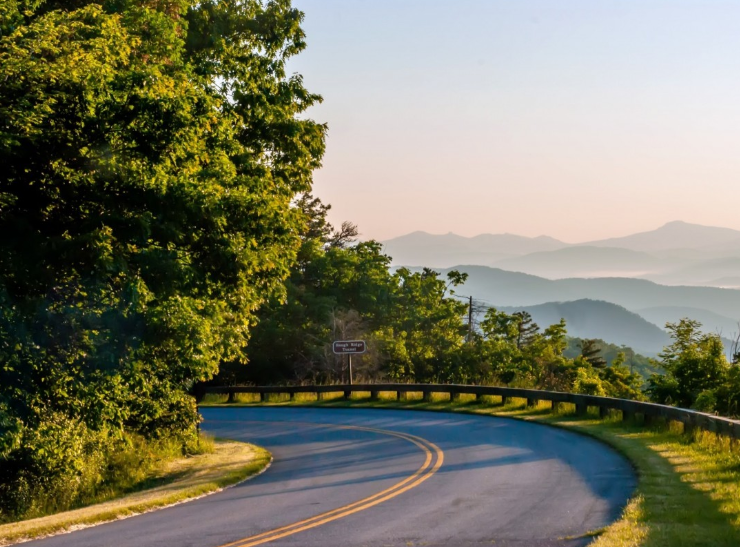
This past September, I went on an excursion held in Asheville, NC. It was the first trip back since my mother had died. It was a much-needed mini-vacation and nature retreat of sorts. I got to spend some quality time with a dear friend for three days as well. I expected some emotions to well up, but not prepared for how deeply it would affect me. Amazing how seven years later, the learned self-loathing from my past reared up its head. I thought I was past it.

During the excursion, I met so many loving and caring people. Quite different from my upbringing. One in particular – France Dormann – who connected with me right at the beginning. She had a rather emotional epiphany as we talked. She said to me, “What’s beautiful doesn’t need to disappear.” It’s not up to me to discuss the details surrounding what made this so tremendously valuable for her, but I will share why it was for me.

Her words echoed so much of what I dealt with in my childhood and even into my adulthood. What was beautiful about me did disappear for a long time. After you get told all of your youth, you aren’t good enough, worthless, crazy, and a problem child. Well, you believe it. But not anymore. Once and for all, I realized my mother was wrong. Totally wrong. This was my takeaway from what France said and what made this so beneficial for me.

After years of denigration and lack of connection, I felt as if I could finally reclaim that part of me worthy of praise and love. And oddly, I found it in the same place where the woman who lavished me with all the criticism came to die. After a few days to process the events, I felt lighter, as if an invisible weight had lifted. What is strange is I thought I’d worked through so much already, and had come to a place of peace. Obviously, not.

So much healing took place on this trip. The bonus being I was within arm’s reach of so many wonderful and supportive people. I cannot tell you how many tears I shed and how many meaningful hugs I received, but it was enough to wash away the mother’s sins, who had inflicted a tremendous amount of torment on her daughter. And for that, I’m grateful for the torrent of tears and the love of my friends. My past will no longer own me.

Originally posted 10/24/2019 on I Write Her.

Never Alone

unencumbered now
i cherish this time with you
safety, peace and calm

Extending

the sun beams guidance
no borders in the spiral
spirit soars higher

**NOTE – This is one of my pieces that didn’t make the cut for Pure Haiku’s Encircling Theme.


Self-Portrait

Image by Susi Bocks

we try to make a good impression
but the presentation is a show
for who we really are
lies in how we see ourselves

Who Am I

descriptors label
we’re complicated humans
i am all these things

Wonderful prompt, Reena! Thanks for always hosting interesting ones for us! I did dig deeper and Googled the word as I’d never heard of it. Fascinating info…

AI Overview

An otrovert is a newly defined personality type, coined by psychiatrist Rami Kaminski, for individuals who are well-adjusted and friendly but consistently feel like outsiders, resisting absorption into groups or collectives. Unlike introverts who turn inward, or extroverts who turn outward, otroverts “turn elsewhere,” prioritizing independence and clarity while maintaining empathy and connection on a deep, individual level rather than in large groups. They are comfortable with their non-belonging, preferring one-on-one interactions over group settings and often finding their unique perspective a source of strength. 

Key Characteristics of an Otrovert:

  • Resists Group Identity: Otroverts question abstract group ideas and don’t feel a deep connection to ideologies, religions, or other large-scale affiliations. 
  • Prefers Individual Connections: They enjoy deep, one-on-one friendships and prefer individual activities over group ones. 
  • Observational and Independent: They are often observers who remain grounded in their own values, rather than conforming to group norms. 
  • Friendly but Not Merged: While empathetic and capable of engaging with groups, they never fully dissolve into the collective, maintaining their emotional autonomy. 
  • A “Foul Weather Friend”: They are reliable and deep friends who help others without expectation of reciprocity. 

How Otroverts Differ from Other Types:

  • vs. Introvert: Introverts are energized by solitude, but otroverts are not necessarily alone; they simply don’t thrive in group settings. 
  • vs. Extrovert: Extroverts gain energy from being around people, while otroverts are comfortable standing apart from the crowd. 
  • vs. Ambivert/Omnivert: These terms describe a person’s ability to balance introverted and extroverted tendencies. Theotrovert focuses on the deliberate nature of non-belonging and the preference for individual connection. 

“Otrovert” and the Concept of Otherness:

The term “otrovert” is derived from the Spanish word “otro” (other). The concept emphasizes the strength in being an outsider and highlights that feeling like an outsider is not a flaw but a distinct personality trait that can lead to unique creativity and insights. 

Best Days Ahead

Redux

life’s cruelty held me down
it dampened me
became hardened even
but there lies
determination within

it resides deep down
in the folds of my being

from this place of
darkness and
stoic bravado

i will emerge
i will rise

watch me become

Originally posted 3/28/2019 on I Write Her, presented with revisions.

Lessons Learned

Redux

Pixabay.com

It all hurts…

other’s cruel intentions
life’s accidental interventions
immature decisions
wounding by self-infliction
external forces not caring about consequences

But it gave me…

an understanding of people and boundaries
resilience in the face of catastrophe and tragedy
consequences and wisdom
pain to overcome
the determination to fight injustice

Life is hard but living is knowing how to keep the goodness thriving in it.

Posted originally 3/25/2019 on I Write Her.

An Original

profoundly novel
with impulsive behavior
intoxicating

Unique

unlike another
individuality
standing tall and proud

Creation

Redux

Pixabay.com

memories of my yesteryears
my reflection a source of power

wisdom gained
propels me into my future

into peace
sometimes discomfort

but always forward
towards the refinement of myself

Originally posted on I Write Her on 3/2/2019.